
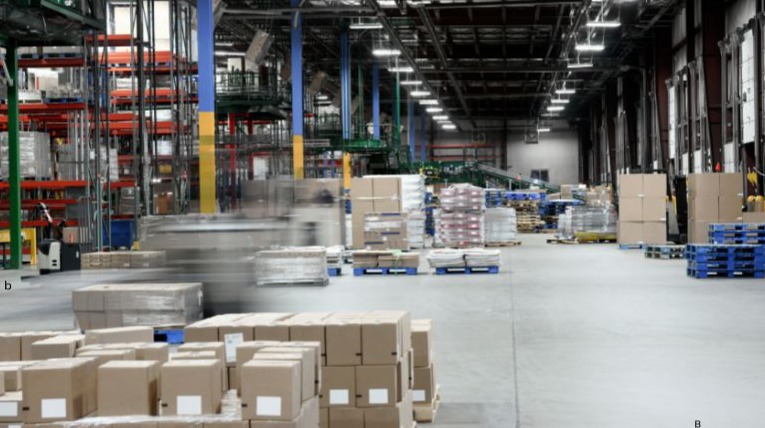
Distribution centers operate in a high-volume, high-velocity environment where accuracy is essential. Every pick, scan, label, and shipment can impact customer satisfaction, business profitability, inventory integrity, and operational costs. Yet many distribution centers still have segments of their operations that rely on manual processes, introducing unnecessary and costly errors and inefficiencies.
End-to-end workflow automation has emerged as a powerful solution for reducing human error while improving speed, consistency, and visibility across distribution operations. Straight Line Solutions specializes in evaluating operations for businesses with intensive materials management challenges, including warehouses, manufacturing facilities, hospitals, and distribution centers. We can help these enterprises configure comprehensive asset and inventory management systems from building robust and secure WiFi networks to configuring hands-free RFID and bar code systems. Implementing the right system for your enterprise can make a significant difference in reducing manual errors.
Understanding Where Manual Errors Occur
While many materials operations have introduced automation at some level, there are still operations that rely to some extent on manual data input that are prone to errors. Manual errors often arise at key points in the distribution process, including:
- Incorrect item picking or quantity selection
- Missed, inaccurate, or incorrect barcode scans
- Labeling and shipping errors
- Unresolved inventory count discrepancies
- Delays caused by discovered errors due to manual data entry
These errors can lead to mis-shipments, returns, inventory inaccuracies, customer dissatisfaction, and increased labor costs. In high-throughput environments, even small error rates can scale into significant operational challenges.
What Workflow Automation Looks Like in Distribution Centers
Often, manual error issues are not a result of equipment problems or employee carelessness, but poorly designed systems or processes that increase the potential for oversights or errors to occur. Workflow automation replaces manual, paper-based, or repetitive tasks with technology-driven processes that guide workers through each step. Common examples include:
- Barcode and RFID-driven picking and verification
- Automated task assignments from WMS or labor management systems
- Scan-to-confirm receiving and put-away workflows
- Automated label printing at the point of application
- System-driven replenishment and inventory adjustments
By enforcing standardized workflows, automation ensures tasks are completed accurately and consistently.
Improving Accuracy Through Real-Time Validation: One of the greatest advantages of workflow automation is real-time validation. Systems can immediately verify:
- The correct item is picked
- The correct location is accessed
- The correct quantity is selected
- The correct label is applied
If an error occurs, the system flags it instantly, allowing workers to correct the issue before it moves downstream. This reduces costly rework and prevents errors from reaching customers.
Reducing Reliance on Manual Data Entry: Any stage of the process that relies on manual data entry is a major source of errors in distribution centers. Automated workflows capture data directly through scanning pre-printed codes, automated sensors, and system integrations, reducing the need for:
- Handwritten notes
- Spreadsheet updates
- Post-process data reconciliation
Automated data capture improves accuracy while also providing real-time visibility into inventory levels, order status, and labor productivity.
Enhancing Training and Workforce Consistency: Automation also plays a critical role in workforce enablement. Guided workflows:
- Reduce training time for new employees
- Minimize dependence on individual knowledge and experience
- Ensure consistent execution across shifts and teams
This is especially valuable in distribution centers with high turnover or seasonal labor demands.
Supporting Scalability and Peak Performance: As order volumes increase, manual processes struggle to keep pace. Automated workflows scale more easily, allowing distribution centers to handle:
- Peak season surges
- Increased SKU complexity and variability
- Expanded fulfillment channels
Automation helps maintain accuracy even as operational demands grow.
The Bottom Line
Workflow automation has revolutionized the ability of distribution centers to process materials with greater accuracy and speed. By developing robust and standardized processes, validating tasks in real time, and minimizing the need for manual data entry, automation improves accuracy, efficiency, and operational resilience. Distribution centers that invest in workflow automation are better equipped to meet customer expectations with speed and accuracy while controlling costs and minimizing risk.
At Straight Line Solutions (SLS), we help distribution centers design and implement workflow automation solutions that reduce errors and improve performance. Contact SLS today to learn more and discover how the right automation can streamline your distribution workflows.